How to Use Google Reviews to Predict Which Businesses Will Buy From You
Published March 6, 2026
Reviews Are Not Just Social Proof -- They Are Buying Triggers
Most sales professionals look at Google reviews and see reputation data. Smart sales professionals look at Google reviews and see a predictive buying model. Every review, every rating, every owner response (or lack thereof) contains information about a business's current pain points, growth trajectory, and willingness to invest in solutions.
This is not theoretical. Teams that incorporate review-based signals into their prospecting consistently outperform those relying on firmographic data alone. The reason is simple: reviews capture the voice of customers in real time, and customer voice is the most honest indicator of a business's operational health.
The Five Review Signals That Predict Buying Intent
REVIEW-BASED BUYING SIGNALS
Signal 1: The Low-Rating Opportunity
Businesses with ratings below 3.5 stars know they have a problem. Google's own research shows that 87% of consumers will not consider a business with fewer than 3 stars. These business owners are losing customers daily and are actively looking for solutions -- whether that is reputation management, customer service training, operational improvements, or marketing to drive more positive reviews.
Signal 2: The Review Volume Gap
Compare a business with 12 reviews against its competitor with 340 reviews. The low-review-count business is either new (growth opportunity) or digitally unsophisticated (education opportunity). Either way, they need help, and they often know it.
Signal 3: The Negative Sentiment Cluster
When multiple recent reviews mention the same complaint -- "long wait times," "rude staff," "poor quality" -- you have identified a specific operational failure. This is gold for solution sellers. You can craft outreach that speaks directly to the documented problem.
Signal 4: The Non-Responsive Owner
Business owners who never respond to reviews are sending one of two signals: they are too busy (need automation/delegation tools) or they do not understand the importance (need education/services). Both are selling opportunities for the right provider.
Signal 5: The Rating Decline
A business that went from 4.5 to 3.8 stars over six months is experiencing a slow-motion crisis. These businesses are often the most motivated buyers because they remember being better and want to get back there.
A 2025 BrightLocal study found that 98% of consumers read online reviews for local businesses, and 76% "regularly" read them. For business owners, this means reviews directly impact revenue. A Harvard Business School study famously found that a one-star increase in Yelp rating leads to a 5-9% increase in revenue. Business owners with poor ratings are literally watching money walk out the door -- making them highly motivated prospects.
Putting Review Intelligence Into Practice
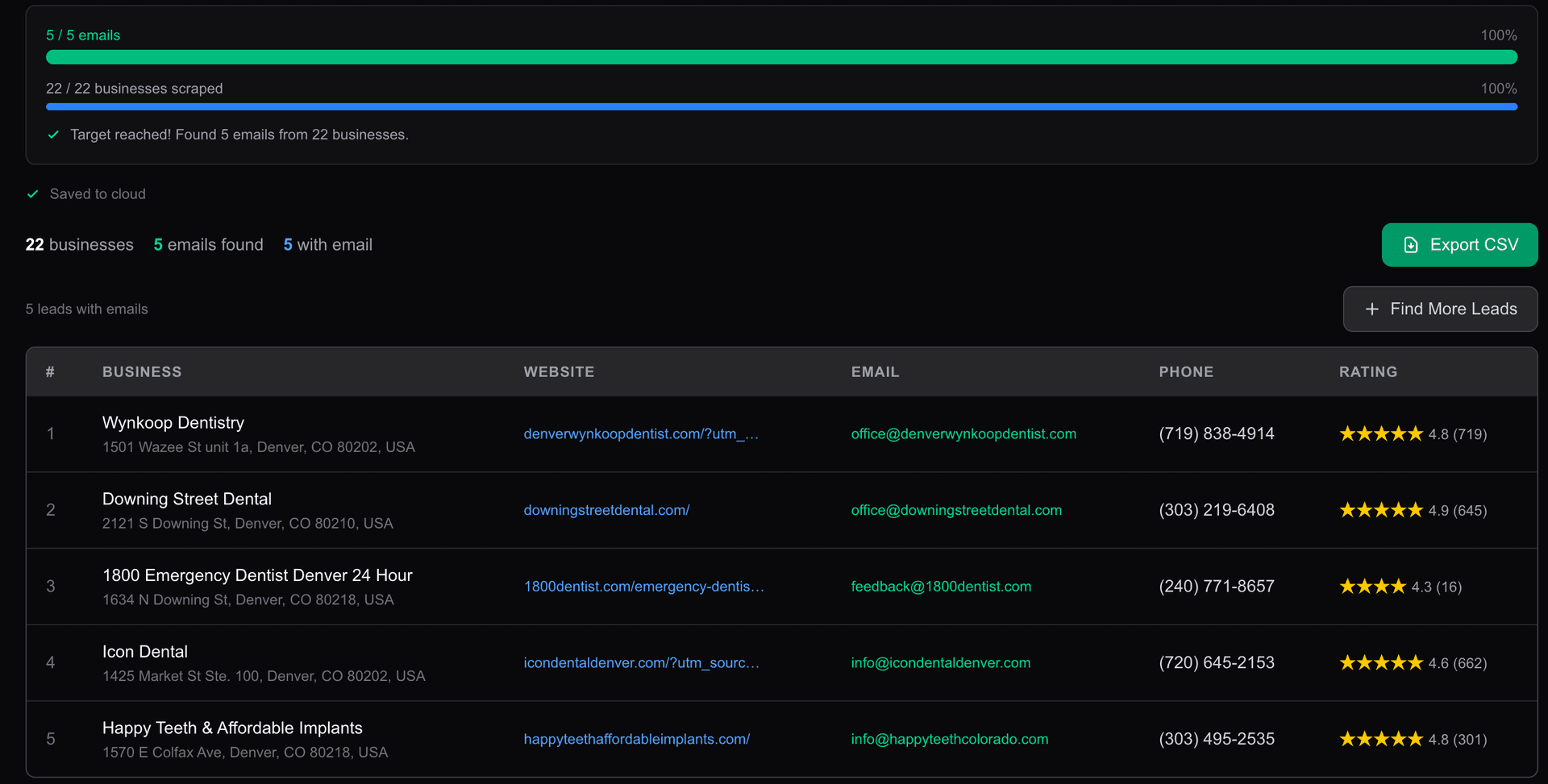
The practical challenge is accessing review data at scale. Manually checking Google reviews for hundreds of businesses is not feasible. This is where platforms like Easy Email Finder become essential. By extracting Google Places data systematically -- including review counts, ratings, and business details -- you can build filtered prospect lists based on review signals rather than guesswork.
Here is a practical workflow:
- Use Easy Email Finder to extract all businesses in your target category and geography
- Sort by rating (ascending) to identify businesses with the most pain
- Cross-reference review count to distinguish between new businesses and struggling ones
- Check for website presence -- businesses with low ratings AND no website are the most underserved
- Craft signal-specific outreach referencing their actual review situation
The Ethical Dimension
A word on ethics: using review data for prospecting is not about exploiting businesses in distress. It is about identifying businesses that genuinely need help and offering it proactively. The best signal-based sellers approach these conversations with empathy and genuine solutions. When done right, review-informed outreach feels like a lifeline, not a cold pitch.
The data is public, the signals are clear, and the businesses need help. The only question is whether you will be the one to offer it.
Ready to find business emails?
Try Easy Email Finder free, get 5 credits to start.
Start Finding Emails