First-Party Data Is the New Gold: Building Your Own Lead Database in 2026
Published March 6, 2026
The Third-Party Data Collapse
Google finally killed third-party cookies. Apple's privacy changes neutered cross-app tracking. Regulatory enforcement of GDPR and state privacy laws tripled in 2025. The entire infrastructure that powered the "buy a list and blast it" approach to B2B marketing has either disappeared or become legally hazardous.
Meanwhile, the shared databases that replaced cookies -- ZoomInfo, Apollo, Lusha -- face their own crisis. When every competitor has access to the same 200 million contacts, the data provides zero competitive advantage. Worse, the contacts in these databases are so heavily solicited that response rates approach statistical noise.
The solution is not better shared data. It is proprietary data -- first-party lead databases built from original sources that your competitors have not tapped.
THE DATA LANDSCAPE SHIFT
What Makes First-Party Data Different
First-party data is data you collect directly from original sources, rather than purchasing from aggregators. In the context of B2B lead generation, this means building your own prospect databases from publicly available information -- company websites, social profiles, government registrations, and critically, Google Business Profiles.
The advantages of first-party data over shared databases:
- Exclusivity: Your competitors do not have the same filtered, enriched dataset
- Freshness: You control when data is refreshed, eliminating decay
- Signal richness: You capture context (ratings, reviews, categories) that shared databases strip away
- Compliance clarity: Public data collection from business listings carries minimal regulatory risk
- Cost efficiency: No recurring per-seat subscriptions to data vendors
Google Maps: The Foundation of Your First-Party Database
For teams targeting local and regional businesses, Google Maps is the single best source for building a first-party database. Every Google Business Profile contains structured data that maps directly to prospecting needs: business name, category, address, phone number, website, hours, ratings, and review counts.
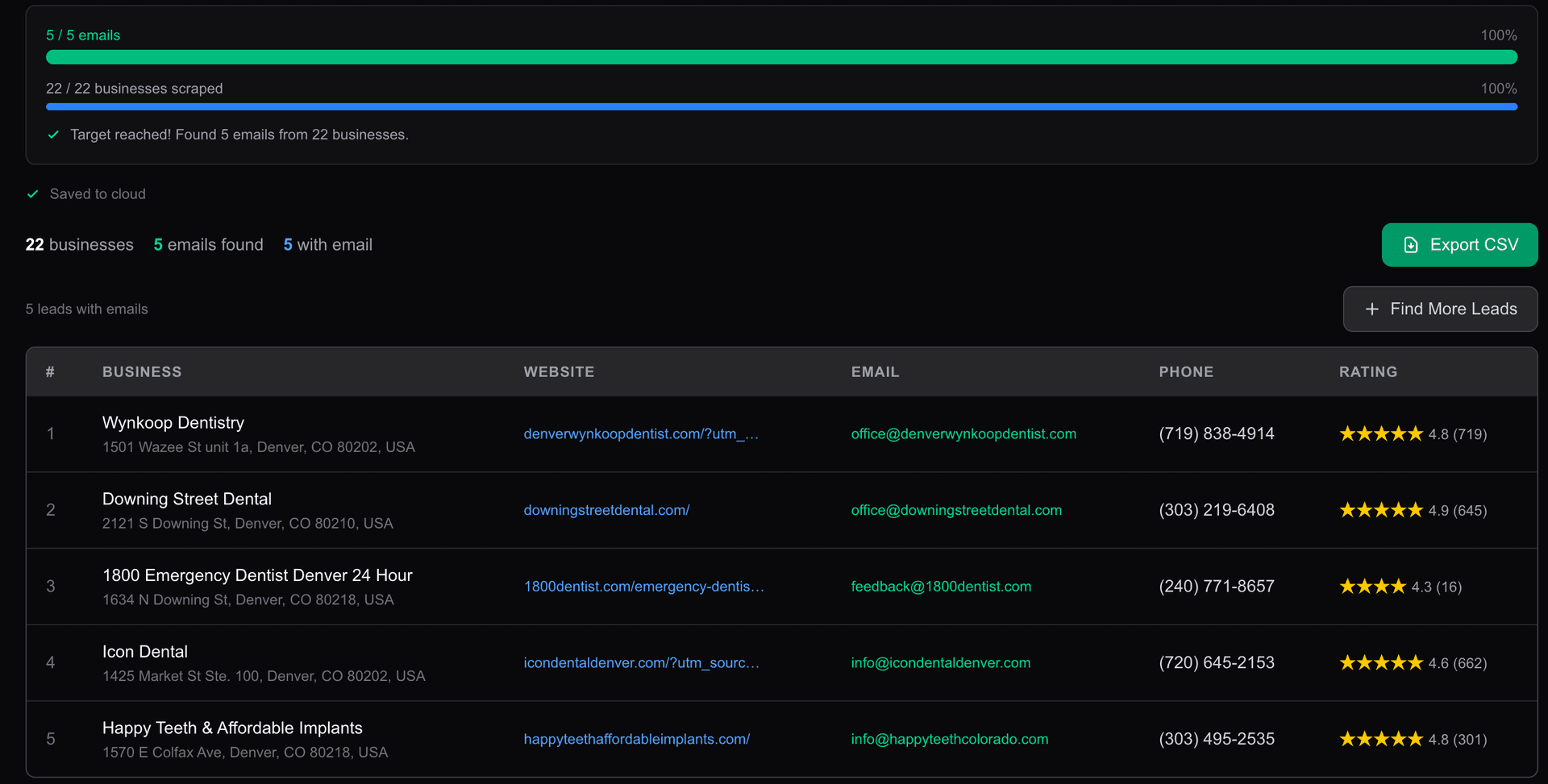
Using Easy Email Finder, you can systematically extract this data at scale, filter it by the signals that matter for your ICP, and enrich it with verified email addresses -- all in one workflow. The result is a prospect database that is simultaneously more accurate, more relevant, and more exclusive than anything you could buy from a data vendor.
Companies that build first-party lead databases report 40-60% lower cost per qualified lead compared to those relying on purchased lists. The initial investment in tooling and process pays for itself within 2-3 months, and the compounding value of a proprietary database increases every quarter as it grows and improves.
The Build Process: From Zero to Database
Building a first-party lead database is not complex, but it requires discipline. Here is the step-by-step process:
- Define your ICP precisely: Industry, geography, company size indicators (review count as a proxy), and qualifying signals
- Extract source data: Pull Google Places data for your target categories and locations using Easy Email Finder
- Apply signal filters: Remove businesses that do not match your ICP based on rating, review count, website presence, or other criteria
- Enrich with contact data: Add verified email addresses and cross-reference with LinkedIn for decision-maker identification
- Score and segment: Assign priority scores based on signal strength and segment into outreach tiers
- Maintain and refresh: Schedule regular data refreshes to catch new businesses and updated signals
The Compounding Advantage
The most powerful aspect of first-party data is that it compounds. Each extraction cycle adds new businesses. Each outreach campaign provides feedback on which signals correlate with conversion. Over months, your database becomes not just a list of contacts but a predictive model for identifying ideal customers.
In a world where shared data is a commodity and privacy regulation only tightens, the teams that own their data own their pipeline. There is no shortcut, but the math is unambiguous: first-party data is the only data strategy with a future.
Ready to find business emails?
Try Easy Email Finder free, get 5 credits to start.
Start Finding Emails