From 10,000 Leads to 100 Perfect Prospects: The Art of Lead List Quality
Published March 6, 2026
The List Size Illusion
There is a persistent myth in sales that bigger lists produce more revenue. The logic seems intuitive: more contacts equals more outreach equals more responses equals more deals. But the math tells a different story. A 10,000-contact list with a 0.5% conversion rate produces 50 opportunities. A 100-contact list with a 25% conversion rate produces 25 opportunities. The smaller list generates half the opportunities with 1% of the effort -- a 50x improvement in efficiency.
This is not an argument against scale. It is an argument against undifferentiated scale. The path to more revenue is not more leads -- it is better leads, scaled deliberately.
THE QUALITY VERSUS QUANTITY EQUATION
0.5% conversion rate
= 50 opportunities
200 hours of outreach effort
0.25 opps per hour
25% conversion rate
= 25 opportunities
10 hours of outreach effort
2.5 opps per hour (10x more efficient)
The ICP Refinement Process
Lead quality starts with ICP clarity. Most companies define their ICP too broadly. "SMBs in healthcare" is not an ICP -- it is a continent. An actionable ICP specifies:
- Industry sub-vertical: Not "healthcare" but "dental practices with 2-5 practitioners"
- Geographic parameters: Not "United States" but "suburban areas in the top 50 MSAs"
- Operational indicators: Not "established" but "100-500 Google reviews, 3.5-4.5 star rating"
- Digital maturity signals: Not "has a website" but "website exists but lacks online booking"
- Timing indicators: Not "might need us" but "review rating declined in last 6 months"
Each additional specificity layer reduces your list size but exponentially increases relevance. The goal is not the smallest possible list -- it is the most qualified list at a size your team can actually work effectively.
The Scoring Methodology
Once you have your ICP defined, every prospect needs a score. Scoring transforms a flat list into a prioritized queue. Here is a practical scoring framework using data available from Google Places:
| Signal | Criteria | Score |
|---|---|---|
| Rating | Below 3.5 stars | +30 points |
| Review count | 50-500 reviews (established but not enterprise) | +20 points |
| Website | Has website (not a social media page) | +15 points |
| No website | Missing website entirely | +25 points (for web dev sellers) |
| Category match | Exact ICP category | +10 points |
Research from TOPO (now Gartner) shows that reps who work highly-scored prospect lists achieve 3x more meetings per 100 dials compared to reps working unscored lists. The scoring does not need to be complex -- even a simple 3-tier system (hot, warm, cold) based on two or three signal criteria dramatically improves outreach efficiency.
The Curation Workflow
Here is how to go from 10,000 raw leads to 100 perfect prospects:
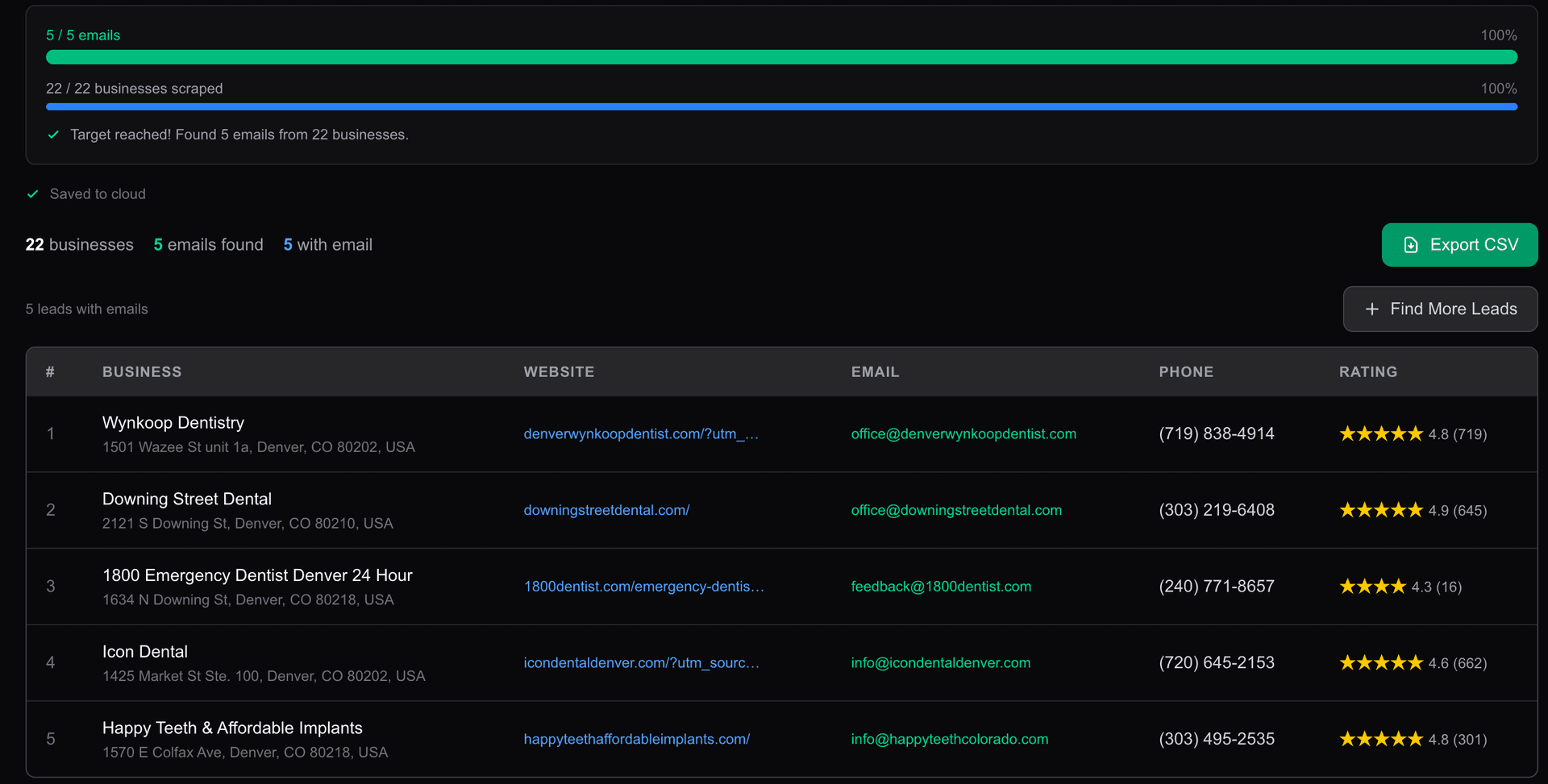
- Bulk extraction: Pull all businesses matching your industry and geography from Google Places using Easy Email Finder. You might start with 5,000-10,000 raw results.
- First filter -- hard disqualifiers: Remove businesses that cannot be your customer (wrong sub-category, insufficient review count indicating too small). This typically eliminates 40-60%.
- Second filter -- signal scoring: Apply your scoring model. Rank every remaining prospect by total score.
- Third filter -- manual review: Review the top 200 scored prospects manually. Check their websites, read their recent reviews, validate the opportunity. This produces your final 100.
- Enrichment: For your final 100, add decision-maker names, verified emails, and any additional context from LinkedIn or company websites.
Quality Is a Competitive Moat
Any competitor can buy a 10,000-contact list from a data vendor. The contacts will be the same ones everyone else is emailing. Building a curated, signal-scored, manually-validated list of 100 perfect-fit prospects is work that your competitors will not do. That work is your moat.
The art of lead list quality is simple to describe and difficult to execute. But the teams that master it spend less time on outreach, get more responses, close more deals, and build predictable, sustainable pipeline. The era of quantity is over. The era of curation has arrived.
Ready to find business emails?
Try Easy Email Finder free, get 5 credits to start.
Start Finding Emails