The 3-Layer Targeting Framework: Industry + Location + Signal
Published March 6, 2026
Why Single-Dimension Targeting Fails
Sales teams have been targeting prospects using one or two dimensions for decades. "We sell to dentists." "We sell to businesses in Texas." These single-dimension approaches worked when competition for attention was low. In 2026, they produce lists so broad that personalization becomes impossible and response rates collapse.
The solution is not more complex buyer personas filled with fictional details about "Marketing Mary's" hobbies. It is a structured, data-driven targeting framework that narrows your universe to prospects who match your ideal customer on three distinct dimensions simultaneously.
THE 3-LAYER TARGETING FRAMEWORK
Layer 1: Industry Targeting
Industry is the foundation because it determines product-market fit. But "industry" is not enough. You need sub-vertical specificity. "Restaurants" is an industry. "Fast-casual restaurants with 2-5 locations" is a targetable segment. The more specific your industry layer, the more relevant your messaging can be.
Google Maps categories provide an excellent industry taxonomy. With over 4,000 business categories, you can target at exactly the level of specificity your product requires -- from broad ("Dentist") to narrow ("Pediatric Dentist" or "Cosmetic Dentist").
Layer 2: Location Targeting
Geography matters more than most B2B teams acknowledge. Local businesses operate in local competitive contexts. A dentist in Manhattan faces different challenges than one in rural Ohio. By targeting at the city or even ZIP code level, you unlock geographic personalization: referencing local market conditions, local competitors, and local trends in your outreach.
Location targeting also enables systematic market coverage. Instead of scattershot national campaigns, you can methodically work through markets: this month Austin, next month Denver, then Portland. Each campaign benefits from concentrated local knowledge.
Layer 3: Signal Targeting
This is where the framework becomes truly powerful. Signals are real-time indicators of buying readiness that transform a static prospect list into a dynamic priority queue. The key signals available through Google Business Profile data include:
| Signal | What It Indicates | Urgency Level |
|---|---|---|
| Rating below 3.5 | Active reputation crisis | HIGH |
| No website listed | Digital sophistication gap | MEDIUM |
| Fewer than 10 reviews | Early-stage or low visibility | MEDIUM |
| High reviews + high rating | Growth-phase business | OPPORTUNITY |
| Rating declining over time | Operational deterioration | HIGH |
Teams using all three targeting layers report 6-8x higher conversion rates compared to single-layer targeting. A campaign targeting "HVAC companies in Phoenix with ratings below 3.5 stars" will dramatically outperform a campaign targeting "HVAC companies" nationally. The math is simple: narrower targeting enables deeper personalization, and deeper personalization drives higher conversion.
Implementing the Framework With Google Places Data
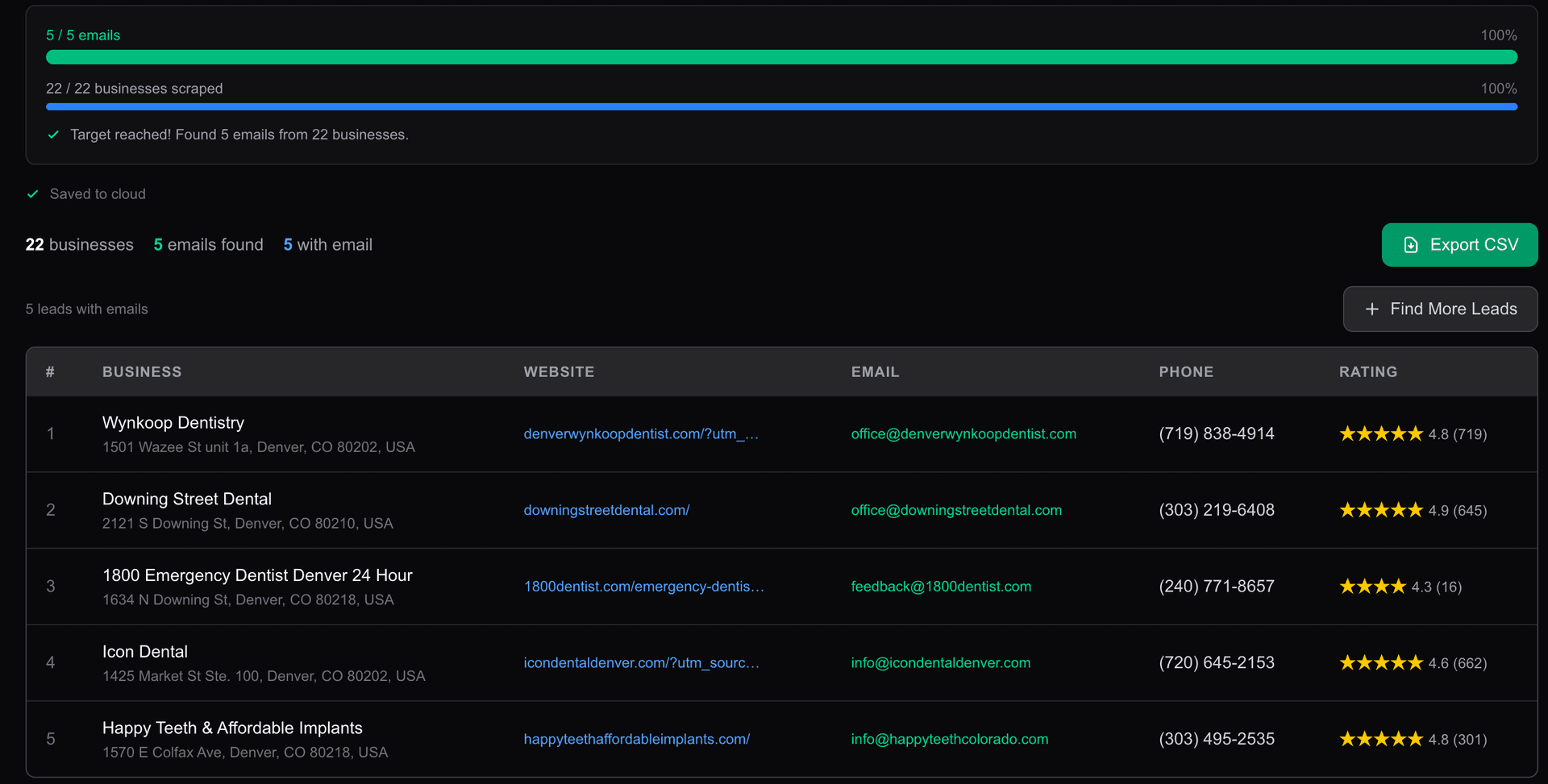
The 3-layer framework maps perfectly to Google Places data extraction. Using Easy Email Finder, you can query by business category (Layer 1) within a specific geographic area (Layer 2), then filter the results by rating, review count, and website presence (Layer 3). The output is a hyper-targeted prospect list with the contact information needed to execute outreach immediately.
The beauty of this approach is its repeatability. Once you validate the framework for one industry-location-signal combination, you can systematically replicate it across new markets. Each iteration refines your understanding of which signal combinations correlate with conversion, creating a continuously improving targeting engine.
From Framework to Revenue
The 3-layer targeting framework is not academic theory. It is a practical methodology that transforms how you build prospect lists, craft messaging, and allocate outreach resources. In a world drowning in data, the competitive advantage goes not to those who have the most data, but to those who filter it most intelligently. Three layers. Three filters. One focused, high-converting prospect list.
Ready to find business emails?
Try Easy Email Finder free, get 5 credits to start.
Start Finding Emails