You Are Overpaying for Leads: The Real Cost of B2B Data in 2026
Published February 26, 2026
The Dirty Secret of B2B Data Pricing
There is a reason B2B data companies do not show their pricing on their websites. They want you on a sales call so they can gauge your budget and charge accordingly. The same tool might cost a startup $200/month and an enterprise $2,000/month for identical functionality.
After spending three years in B2B sales and testing every major data platform, I am going to break down what things actually cost, and why most businesses are dramatically overpaying for lead data.
What the Major Platforms Actually Charge
Let's pull back the curtain on real pricing in 2026:
- ZoomInfo: Starts at $15,000/year for a single user. Enterprise plans exceed $40,000/year. You get a large database, but you are paying for millions of contacts you will never use.
- Apollo.io: Free tier with 60 credits/month. Paid plans from $49-119/month. Good value but credits run out fast, a single search can burn 25+ credits.
- LinkedIn Sales Navigator: $99/month. Great for finding people, but you do not get email addresses. You need another tool on top of this.
- Lusha: Free tier with 50 credits/month. Paid from $49/month. Phone number focused, email accuracy varies.
- Hunter.io: Free tier with 25 searches/month. Paid from $49/month for 500 searches. Domain-based lookup, no Google Places integration.
- RocketReach: From $53/month for 80 lookups. $179/month for 300 lookups. Per-lookup pricing gets expensive fast.
The Hidden Costs Nobody Mentions
The subscription price is just the beginning. Here is what really eats your budget:
- Annual commitments: Most platforms require 12-month contracts. Cancel early and you still owe the full amount.
- Credit overages: Run out of credits mid-month? Buy more at a premium or wait. Either way, your prospecting stops.
- Seat fees: Need a second user? That is often 50-100% more. A sales team of 5 on ZoomInfo can cost $50,000+/year.
- Data decay: B2B contact data decays at roughly 30% per year. The email you looked up in January might bounce by June. You paid for data with a shelf life.
- Feature gating: Export to CSV? Premium feature. API access? Enterprise plan. CRM integration? Extra. The base price gets you in the door, then upsells get you what you actually need.
What Lead Data Actually Costs to Source
Here is what most people do not realize: the underlying data that these platforms sell you is often publicly available. Business names, addresses, phone numbers, and websites are all on Google Maps. Email addresses are on company websites. These platforms are essentially aggregating public data and charging a massive premium for the convenience.
The real cost of sourcing this data yourself:
- Google Places API: $0.017 per request (Google's published pricing)
- Website scraping for emails: Fractions of a penny per page visited
- Total cost per lead with full data: Under $0.05 if you build it yourself
The problem, of course, is that building it yourself requires engineering time. That is the tradeoff these platforms exploit: they charge 10-50x the raw data cost because they save you from building the infrastructure.
The Middle Ground: Pay-Per-Lead
There is a third option between "build it yourself" and "$15,000/year subscriptions": pay-per-lead tools with no subscription.
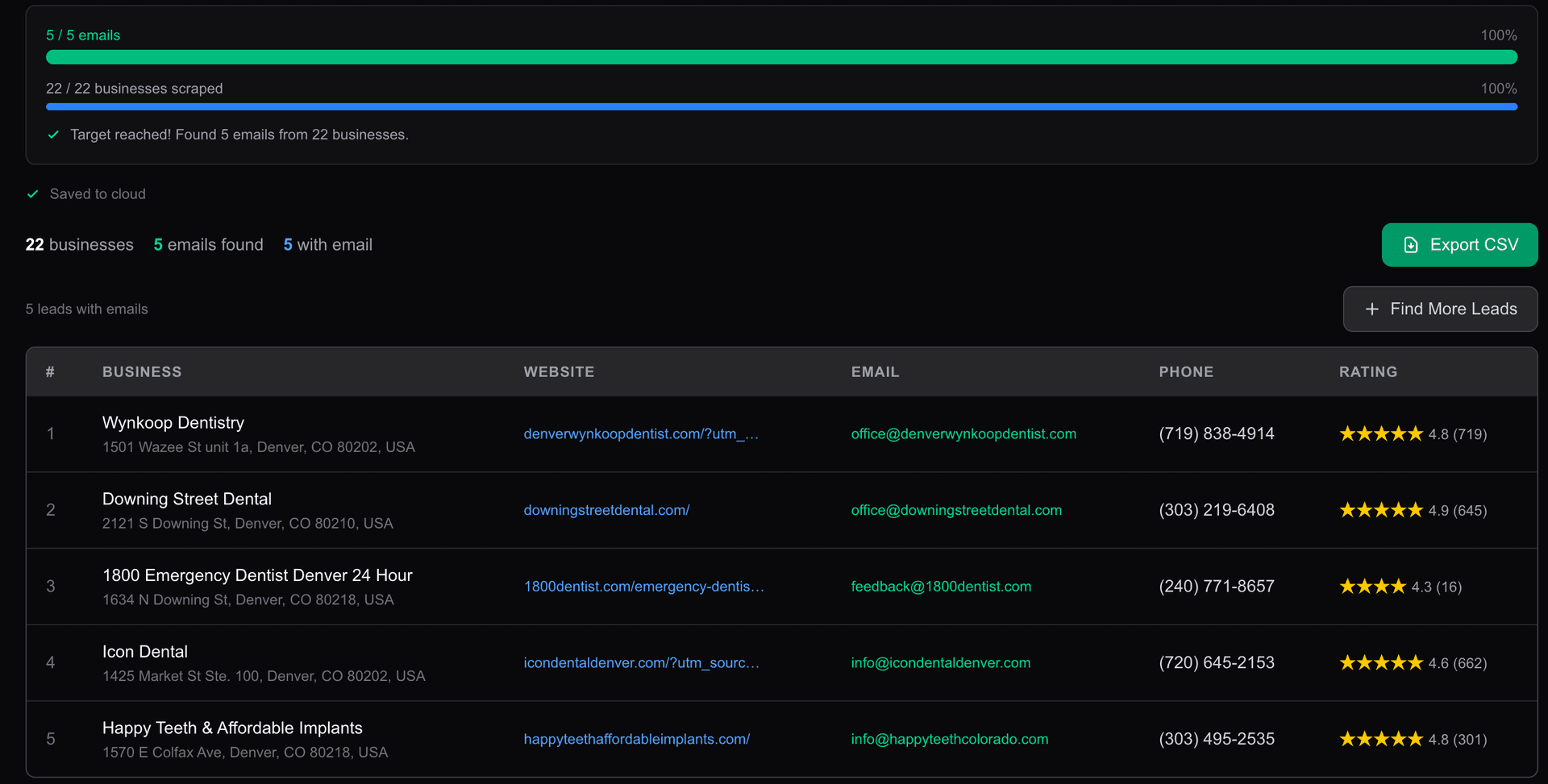
Easy Email Finder is built on exactly this model. You pay $0.25 per email found. No monthly fee. No annual contract. No credit that expires. No seat limits. You pay for what you use and nothing else.
Here is how the math works for a typical small business prospecting use case, finding 200 leads per month:
- ZoomInfo: $1,250/month ($15,000/year ÷ 12)
- Apollo.io: $99/month (Professional plan)
- Hunter.io: $99/month (Growth plan)
- RocketReach: $179/month (Pro plan)
- Easy Email Finder: $50/month (200 × $0.25)
That is a savings of $588-$14,400 per year depending on what you are replacing. And you get Google Places data that most other tools do not include, ratings, review counts, business categories, and full addresses.
When Expensive Platforms Make Sense
To be fair, ZoomInfo and Apollo have their place. If you are an enterprise sales team doing 10,000+ lookups per month across a 50-person SDR team with complex CRM integrations and need technographic data, the big platforms are worth the cost. Their databases are massive and their integrations are mature.
But if you are a small business owner, freelancer, agency, or solo sales rep who needs to find business contact information for local or niche outreach, you are buying a Ferrari to drive to the grocery store.
The Decision Framework
Here is how to decide what you actually need:
- How many leads per month? Under 500? You do not need an enterprise platform.
- What type of businesses? If you target local businesses (restaurants, clinics, agencies, contractors), Google Places data is the best source. If you target Fortune 500 companies, you need a different approach.
- Do you need phone numbers or just emails? Most affordable tools give you both.
- Do you need a CRM integration? If yes, check which tools integrate with yours. If no, CSV export is all you need.
- Can you commit to 12 months? If your prospecting needs are variable, avoid annual contracts. Pay-per-use tools let you scale up or down without penalty.
Stop Renting Data You Can Own
The B2B data industry thrives on making you feel like you need their subscription to prospect effectively. The truth is simpler: for most use cases, you need a business name, an email address, and a reason to reach out. Everything else is nice-to-have.
Try Easy Email Finder free, 5 lookups, no credit card, and see if the data quality matches what you are currently paying 10x more for. You might be surprised.
Ready to find business emails?
Try Easy Email Finder free, get 5 credits to start.
Start Finding Emails