Voice Search and Local Business: How to Get Found When Customers Ask Alexa
Published March 6, 2026
Voice Search Has Gone Mainstream for Local Queries
For years, voice search was the "next big thing" that never quite arrived. That has changed dramatically. In 2026, 31% of all local business queries originate from voice assistants, Alexa, Siri, Google Assistant, and increasingly, AI-powered devices from newer entrants. The shift is driven by smart home adoption, improved natural language processing, and simple convenience.
Voice queries are fundamentally different from typed searches. Nobody says "plumber Austin TX" to their Alexa. They say "Alexa, find me a plumber near me who can come today." This conversational format requires a completely different optimization approach, and most local businesses have not caught up.
VOICE SEARCH FOR LOCAL BUSINESSES: 2026 DATA
The Winner-Takes-All Problem
Here is the critical difference between voice and screen-based search: voice assistants typically return one answer. When someone types a query, they see ten results and choose. When someone asks Alexa, they get one recommendation. If that recommendation is not you, you do not exist for that customer.
This makes voice search optimization incredibly high-stakes. Being second is the same as being invisible. The factors that determine who gets that single recommendation are different from traditional SEO, and understanding them is crucial.
How to Optimize for Voice Search
1. Nail Your Google Business Profile
Voice assistants pull local business data primarily from Google Business Profile. Every field must be complete and accurate, business name, address, phone, hours, categories, services, and attributes. Incomplete profiles are immediately disqualified from voice results.
2. Use Conversational Content
Structure your website content around questions people actually ask. Instead of a page titled "Plumbing Services," create content that answers "How much does it cost to fix a leaking pipe?" and "Can I get a plumber on the weekend?" FAQ pages with natural-language questions and concise answers are voice search gold.
3. Implement Structured Data Markup
Schema markup tells search engines exactly what your business offers, where you are located, and how to contact you. LocalBusiness schema, FAQ schema, and Service schema are the three most impactful types for voice search visibility. Most local business websites have zero structured data, which means implementing it gives you an immediate advantage.
Voice search is a discovery channel, not a conversion channel. 82% of voice-initiated local searches lead to a follow-up screen-based action before a purchase decision. This means voice gets you noticed, but your website and reviews close the deal.
Why Voice Search Alone Is Not Enough
Even if you perfectly optimize for voice search, you are still waiting for customers to come to you. Voice search is passive, it only works when someone is actively looking. For most local businesses, the bigger opportunity is reaching potential customers before they search at all.
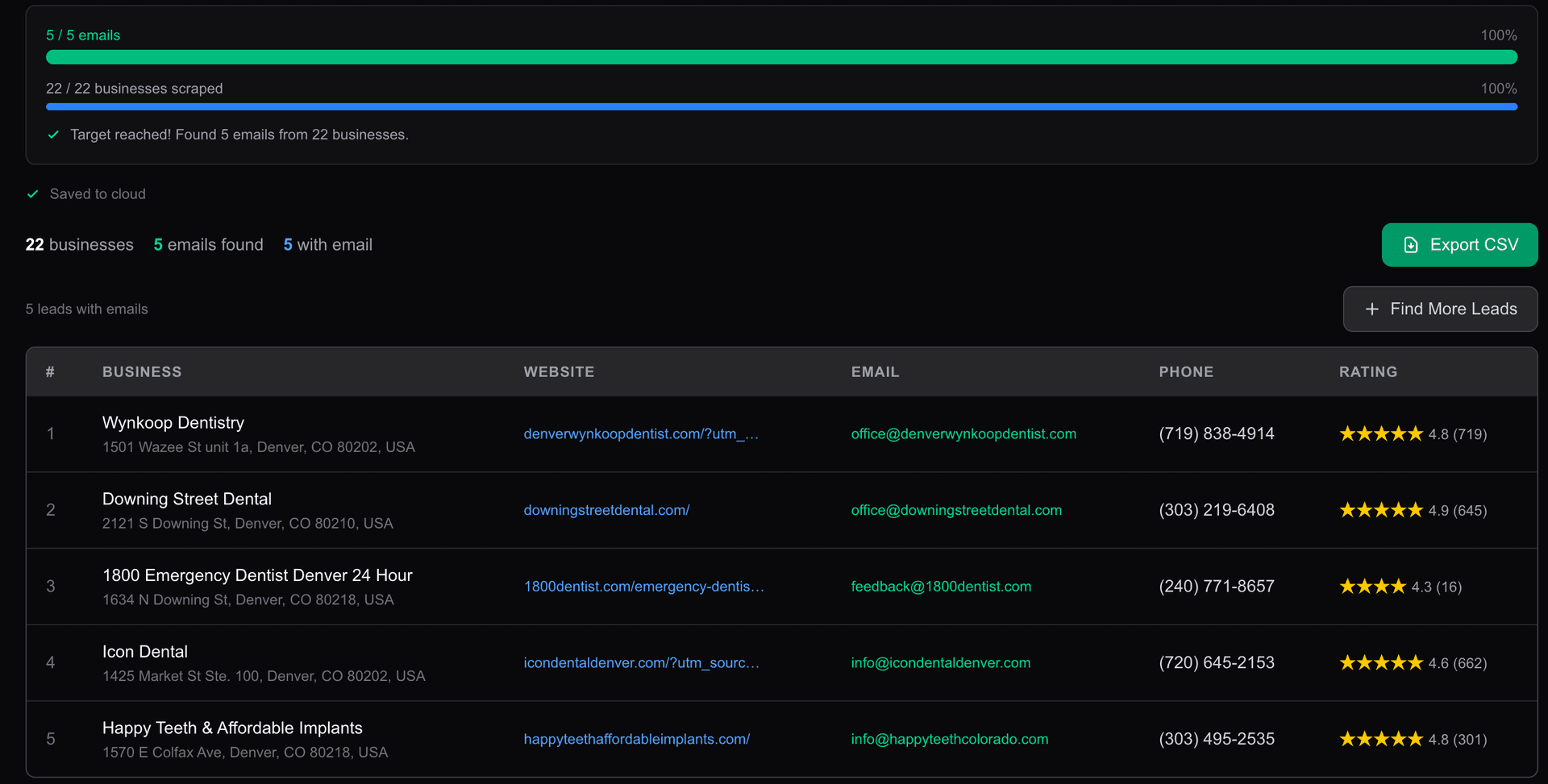
This is where proactive outreach complements voice search optimization. While you optimize your profiles and content for voice discovery, tools like Easy Email Finder let you identify and contact potential clients directly. You can build a prospect list of businesses in your service area and reach out with personalized emails, no algorithm required.
The Complete Local Visibility Strategy
Think of local business visibility as three layers. Layer one is your Google Business Profile and voice search optimization, making sure you are findable when people search. Layer two is your website and review profile, building the credibility that converts interest into action. Layer three is proactive outreach, using Easy Email Finder to generate leads that never pass through a search engine at all.
Businesses that master all three layers are not just surviving the search evolution, they are thriving because of it. Each layer reinforces the others, creating a flywheel that accelerates growth regardless of what Google, Alexa, or any other platform decides to do next.
Ready to find business emails?
Try Easy Email Finder free, get 5 credits to start.
Start Finding Emails