Google AI Overviews Are Killing Local SEO: How Smart Businesses Are Adapting in 2026
Published March 6, 2026
The Zero-Click Apocalypse Is Here
If you have noticed your organic traffic tanking over the past year, you are not imagining things. Google's AI Overviews, those large, AI-generated answer blocks that appear at the top of search results, have fundamentally changed how consumers find local businesses. The era of ranking number one and watching leads roll in is effectively over for most local queries.
In 2025, Google expanded AI Overviews to cover nearly every local intent query. By early 2026, the data is undeniable: organic click-through rates for local service queries have dropped by 34% year-over-year. For informational queries like "best plumber near me" or "how much does HVAC repair cost," the decline is even steeper.
THE ZERO-CLICK LOCAL SEARCH CRISIS (2026)
What AI Overviews Actually Do to Local Businesses
When someone searches "emergency electrician in Austin," Google now synthesizes an answer from multiple sources, pulling business names, phone numbers, ratings, and even pricing estimates directly into the search results page. The user gets what they need without ever visiting your website.
This creates a brutal dynamic: Google is using your content to generate answers that keep users on Google. Your carefully optimized blog posts, your FAQ pages, your service descriptions, they all feed the AI that prevents clicks to your site.
For businesses that relied heavily on organic search traffic, this is an existential threat. The funnel has been severed at the very top.
How Smart Businesses Are Adapting
The businesses thriving in 2026 share one common trait: they have diversified away from search dependency. Here are the three strategies that are actually working.
1. Direct Outreach Over Passive Discovery
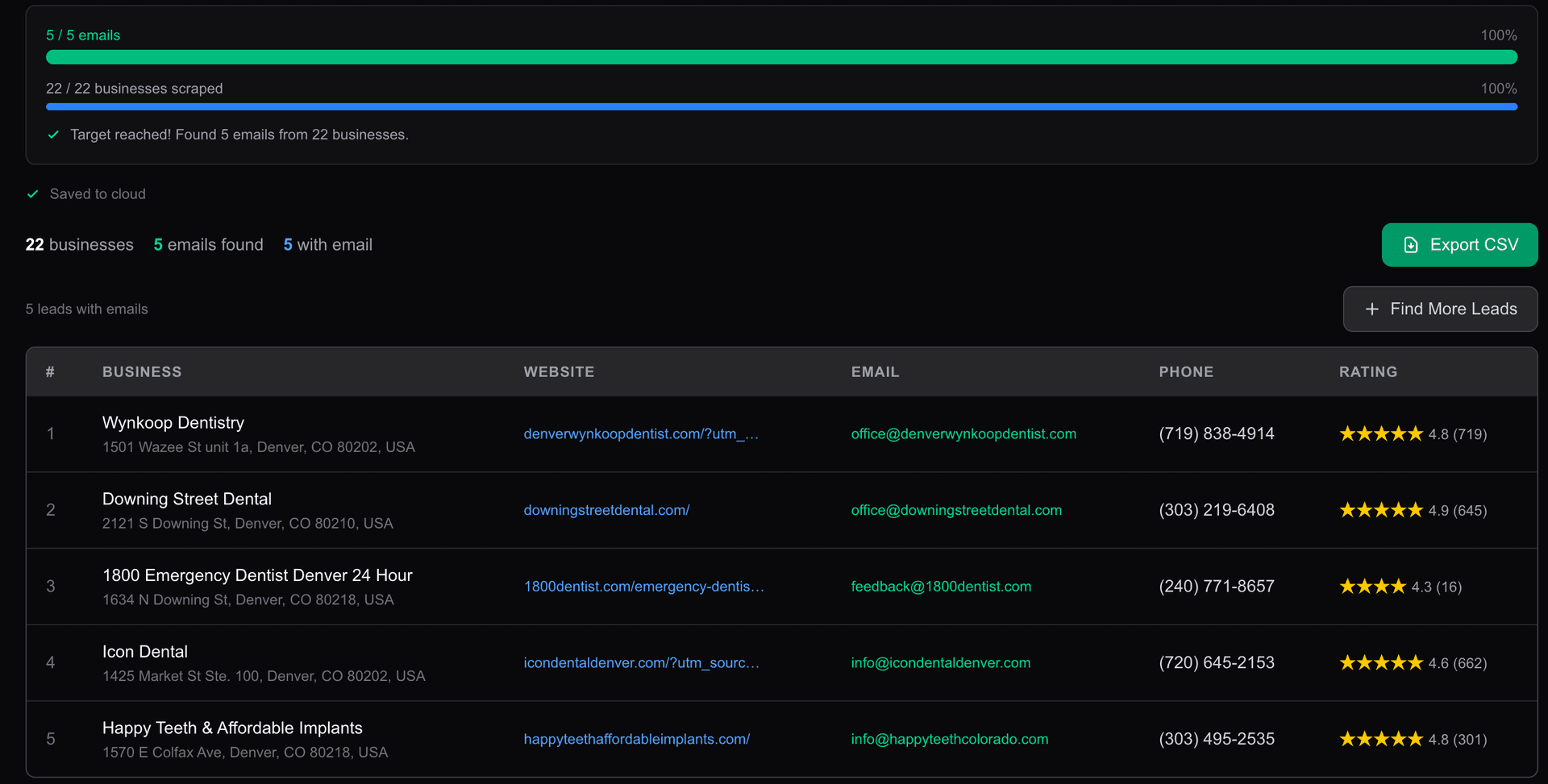
Instead of waiting for customers to find them, successful local businesses are proactively reaching out to potential clients. Tools like Easy Email Finder allow service businesses to identify and contact prospects directly, bypassing the search engine entirely. This shift from inbound to outbound is the single biggest strategic change in local business marketing this decade.
2. Building First-Party Data Assets
Email lists, customer databases, and direct relationships are now more valuable than any search ranking. When you own the contact information, no algorithm change can take it away. Smart businesses are using every interaction, every service call, every estimate, every consultation, to build their owned audience.
3. Combining SEO With Proactive Prospecting
SEO is not dead, but it can no longer be your only channel. The winning formula in 2026 is maintaining your Google Business Profile for credibility while simultaneously running outbound campaigns. Use Easy Email Finder to build prospect lists from Google Maps data, then reach out with personalized emails that reference the prospect's specific needs.
Businesses that combine SEO with direct email outreach are reporting 3.2x more leads than those relying on organic search alone. The hybrid approach is not optional anymore, it is survival.
The Uncomfortable Truth About 2026 Local Marketing
Google has made it clear: they want to be the destination, not the directory. Every product update over the past three years has moved in this direction. AI Overviews are just the most visible manifestation of a deeper strategic shift.
Local businesses that accept this reality and build multi-channel lead generation systems will thrive. Those that keep optimizing title tags and hoping for the best will slowly fade. The choice is yours, but the data is not ambiguous.
Start by auditing how many of your leads currently come from organic search. If it is more than 50%, you are dangerously exposed. Begin building your outreach infrastructure today with tools like Easy Email Finder, and treat every new contact as an asset that appreciates in value over time.
Ready to find business emails?
Try Easy Email Finder free, get 5 credits to start.
Start Finding Emails