How to Send 1,000 Cold Emails a Week Without Getting Blacklisted
Published March 6, 2026
Volume Without Infrastructure Equals Blacklisting
Most senders who get blacklisted are not spammers. They are legitimate salespeople who scaled too fast on too little infrastructure. Sending 1,000 cold emails per week from a single domain and inbox is a recipe for deliverability disaster. But 1,000 emails per week distributed across proper infrastructure? That is entirely achievable and sustainable.
The difference is not the volume, it is the architecture.
1,000 EMAILS/WEEK INFRASTRUCTURE BLUEPRINT
Step 1: Domain Rotation Architecture
Never send all your cold outreach from your primary business domain. If it gets flagged, your entire company email is compromised, including transactional emails to existing customers.
Set up 3-5 secondary domains that are related to your brand. If your company is "acme.com," register domains like "acmeteam.com," "getacme.com," "acmehq.com." Each domain needs:
- Full DNS authentication (SPF, DKIM, DMARC)
- A simple landing page (even one page, empty domains look suspicious)
- 2-3 Google Workspace or Microsoft 365 inboxes each
- 30 days of warm-up before any cold sending
Distribute your 1,000 weekly emails across these domains. With 5 domains and 2 inboxes each, that is 100 emails per inbox per week, roughly 20 per day. Well within safe limits.
Step 2: Sending Limits and Pacing
Respect these per-inbox daily limits in 2026:
- Google Workspace: 30-40 cold emails per day per inbox (Gmail allows 500 total, but cold email should stay at 30-40)
- Microsoft 365: 30-50 cold emails per day per inbox
- SMTP providers: Varies, but 50-100 per day per inbox is standard
Space emails throughout the day. Do not blast 40 emails at 9 AM. Send 5-8 per hour during business hours with randomized intervals between 3-7 minutes.
Google Workspace accounts that consistently send 50+ cold emails per day from a single inbox face a high probability of temporary sending restrictions within 2-3 weeks. Stay below 40 per inbox per day for long-term sustainability.
Step 3: List Quality Is Your Moat
High-volume sending amplifies list quality problems. A 3% bounce rate on 50 emails per week is 1-2 bounces, manageable. At 1,000 per week, it is 30 bounces, enough to trigger reputation damage across multiple domains simultaneously.
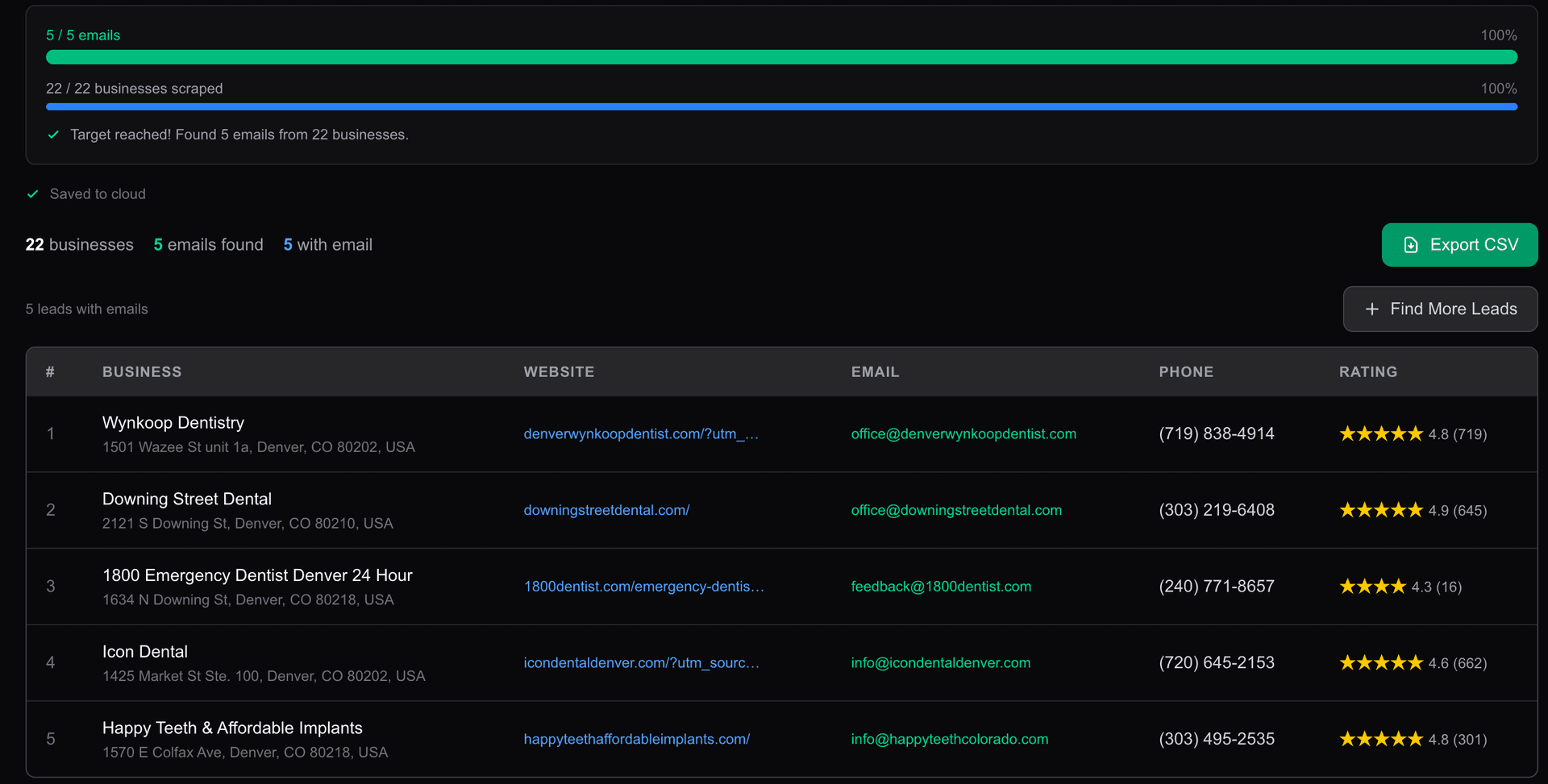
Verify every single email address before adding it to any campaign. Easy Email Finder provides pre-verified business emails sourced through the official Google Places API, which means the contacts are current and the businesses are verified. At high volume, the cost of verification is a fraction of the cost of rebuilding a blacklisted domain.
Step 4: Engagement Optimization
Email providers measure engagement signals: opens, replies, clicks, and time spent reading. High engagement tells Gmail your emails are wanted. Low engagement signals spam.
Optimize for replies by:
- Writing short emails (50-125 words perform best for cold outreach)
- Asking a specific, easy-to-answer question
- Personalizing the first line with something relevant to the recipient
- Using plain text format, no images, no heavy HTML
- Sending at times when your target persona actually reads email
Step 5: Reputation Monitoring
Monitor these metrics weekly for each sending domain:
- Google Postmaster Tools: Domain reputation, IP reputation, spam rate
- Blacklist checks: Run MXToolbox checks weekly for each domain and IP
- Bounce rate: Must stay below 2% per domain. Alert at 1%.
- Spam complaint rate: Must stay below 0.1%. Alert at 0.05%.
- Inbox placement: Use seed testing to verify actual inbox placement rates
Sending 1,000 cold emails per week is sustainable when you distribute across 3-5 warmed-up domains, limit each inbox to 30-40 emails per day, verify every address with Easy Email Finder, and monitor reputation metrics weekly. The infrastructure investment pays for itself in consistent deliverability.
Ready to find business emails?
Try Easy Email Finder free, get 5 credits to start.
Start Finding Emails