How SaaS Founders Use Local Business Data to Find Their First Enterprise Clients
Published March 6, 2026
The Untapped Goldmine Sitting in Google Maps
Most SaaS founders look for enterprise clients on LinkedIn, in CRM databases, or through expensive data providers. They're overlooking one of the richest, most accurate, and most accessible data sources on the internet: Google Places.
Every business listed on Google Maps has a treasure trove of signals: industry, location, review count, rating, website, phone number, operating hours, and more. For founders selling to local or multi-location businesses, this data is pure gold.
Why Google Places Data Beats Traditional Lead Sources
Traditional B2B databases like ZoomInfo or Apollo are great for tech companies and large enterprises. But if your ICP includes restaurants, retail stores, medical practices, law firms, home services, or any local business, those databases are incomplete and often outdated.
Google Places is updated in real-time by business owners and customers. A restaurant that opened last month is already on Google Maps. A dental practice that moved locations updated their listing last week. This freshness is impossible to match with annual data scrapes.
GOOGLE PLACES DATA SIGNALS FOR ICP MATCHING
Strategy 1: Review Count as a Size Proxy
A business with 500+ Google reviews isn't a mom-and-pop shop. It's a high-volume operation with real revenue. Use review count as a proxy for business size and maturity. If you sell to mid-market businesses, filter for 100-500 reviews. Enterprise? Look for 500+.
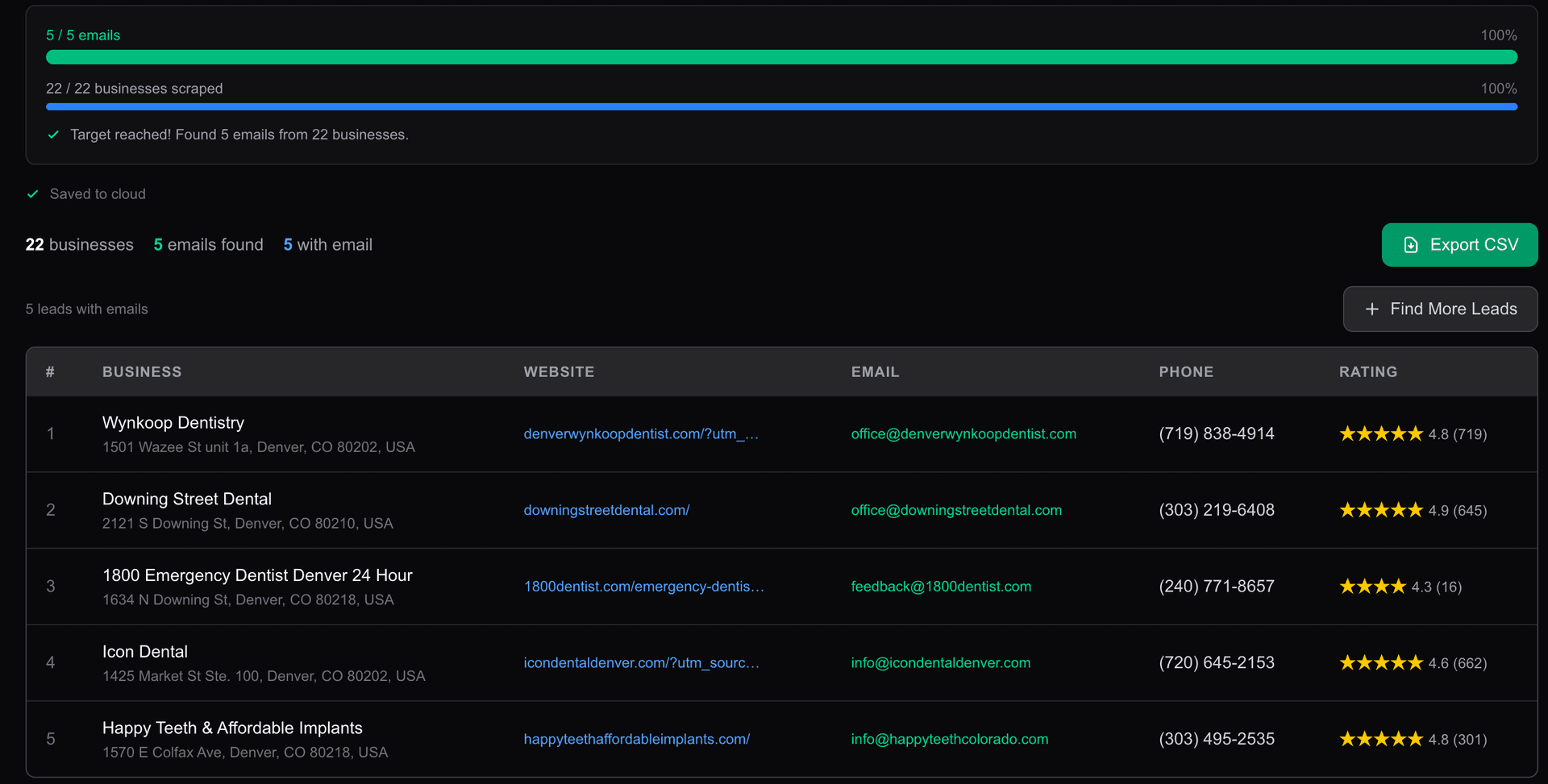
Tools like Easy Email Finder let you pull this data at scale, search by business type and location, then sort and filter by review count to identify your ideal targets without manually scrolling through Google Maps.
Strategy 2: Rating Gaps as Pain Indicators
A business with a 3.2 rating and hundreds of reviews is in pain. Read those negative reviews, they'll tell you exactly what's broken. If your product solves the problem customers are complaining about, you've found the perfect outreach angle.
"I noticed customers are mentioning long wait times in your reviews. We help restaurants reduce table turn time by 40%..." That email writes itself.
One of our customers, a restaurant tech SaaS, used Google Places data to find 200 pizza chains with 3-star ratings and complaints about online ordering. They emailed each owner with a personalized note referencing specific negative reviews. The result: 34 demos booked, 12 closed. That's a 6% close rate from cold outbound, which is exceptional.
Strategy 3: Geographic Clustering for Enterprise Expansion
If you've closed one dental practice in Phoenix, search for every dental practice within 50 miles. Multi-location owners often appear across several listings. Close one location, and you unlock the whole chain. Google Places data makes geographic clustering effortless.
Strategy 4: Website Analysis for Tech Stack Signals
Every Google Places listing includes a website URL. Visit those websites and look for tech stack signals. Are they using Squarespace? They probably need better tools. Still on an old WordPress theme? They're not tech-savvy and might need a simpler solution. No online booking? That's your opening.
Building Your Google Places Pipeline
Here's the process: Define your ICP by business type and location. Use Easy Email Finder to pull Google Places data for your target segments. Filter by review count and rating. Visit websites to qualify further. Build your outreach list. Send personalized emails referencing specific details from their listing.
This approach gives you prospect lists that are fresher, more targeted, and more actionable than anything you'll find in a traditional B2B database. For founders selling to local and multi-location businesses, Google Places data is the ultimate prospecting weapon.
Ready to find business emails?
Try Easy Email Finder free, get 5 credits to start.
Start Finding Emails