Bounce Rate Below 2%: Why Email Verification Is Non-Negotiable in 2026
Published March 6, 2026
The Bounce Rate Domino Effect
When an email bounces, it seems like a minor inconvenience, one undelivered message. In reality, every bounce triggers a chain reaction that degrades your entire sending infrastructure. Email providers interpret high bounce rates as a signal that you are not maintaining your lists, which correlates with spamming behavior. Once that association forms, even your emails to valid addresses start landing in spam.
The threshold is lower than most senders realize. Gmail and Microsoft consider anything above 2% bounce rate a red flag. Industry best practice in 2026 is to stay below 0.5%. The difference between 0.5% and 3% is the difference between reliable inbox placement and gradual domain death.
HOW BOUNCE RATE AFFECTS DELIVERABILITY
Hard Bounces vs Soft Bounces
Not all bounces are equal, but both matter:
- Hard bounces, The email address does not exist, the domain is invalid, or the server permanently rejects the message. These are the most damaging. A single campaign with 5% hard bounces can trigger immediate throttling.
- Soft bounces, Temporary issues like a full inbox, server timeout, or message too large. Less damaging individually, but persistent soft bounces to the same address signal a problem.
Email providers weigh hard bounces heavily. Three hard bounces to the same domain in one campaign can get your entire sending IP flagged for that domain's mail server.
Where Bad Email Addresses Come From
Understanding the sources helps you eliminate them:
- Purchased lists: The worst source. Purchased lists routinely contain 15-30% invalid addresses, plus spam traps planted by ISPs specifically to catch bulk senders.
- Outdated data: People change jobs, companies shut down, domains expire. A list that was 95% valid six months ago might be 80% valid today.
- Typos and formatting errors: Manual data entry introduces errors. "gmail.com" vs "gmial.com", the difference between delivery and a bounce.
- Role-based addresses: info@, sales@, support@, these often bounce or route to unmonitored inboxes.
- Catch-all domains: Some domains accept all email addresses. This means verification passes but the email may never be read.
Spam traps are recycled email addresses that ISPs monitor. Sending to a spam trap does not bounce, it silently reports you as a spammer. The only protection is using verified, recently-validated email addresses from reputable sources.
The Verification Solution
Email verification tools check whether an address is deliverable without actually sending an email. The process involves DNS lookups, SMTP handshake simulation, and mailbox-level validation. Here is what to look for in a verification provider:
- Real-time verification: Check addresses at the point of collection, not in batches days later
- Catch-all detection: Identify domains that accept all addresses so you can flag them
- Disposable email detection: Block temporary email addresses that self-destruct
- Role-based detection: Flag info@, admin@, and similar non-personal addresses
- Spam trap identification: Detect known spam trap patterns and retired domains
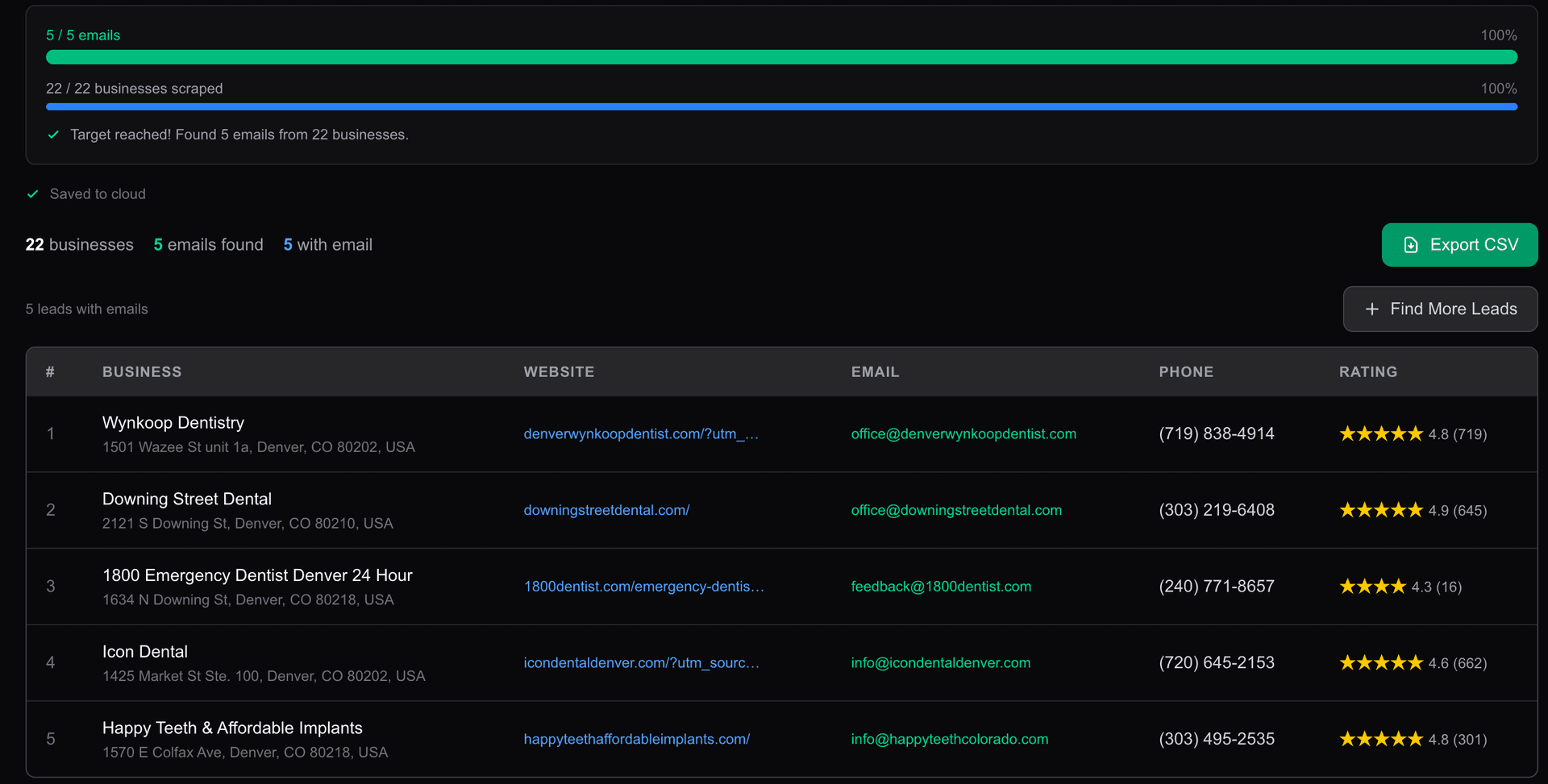
Easy Email Finder handles verification automatically as part of its contact discovery process. Because it sources business data through the official Google Places API, you start with verified business listings and get validated email addresses, eliminating the two biggest sources of bounces: bad data and outdated contacts.
Building a Zero-Bounce Workflow
- Verify at collection: Every new email address gets verified before entering your database
- Re-verify before campaigns: Validate your entire list monthly, addresses go stale faster than you think
- Monitor in real-time: Track bounce rates per campaign and per domain. Set alerts at 1%.
- Auto-suppress bounces: Hard bounces should be permanently suppressed within minutes, not days
- Audit sources: Track bounce rates by data source. If one source consistently produces high bounces, stop using it.
The 2% bounce rate threshold is not a guideline, it is a hard limit that determines whether your emails reach inboxes or get blocked. Verify every email address before sending using tools like Easy Email Finder, re-verify monthly, and monitor bounce rates per campaign. Your sender reputation depends on it.
Ready to find business emails?
Try Easy Email Finder free, get 5 credits to start.
Start Finding Emails